Restore Worn Louboutin Soles
From light scuffing to severe wear, restoration depends on condition, prior repairs, and the finish you want to preserve.
Worn Louboutin soles are not all the same. Some show light scuffing. Others are heavily abraded, repainted, or covered with rubber overlays. The question is not simply whether the sole is worn, but what kind of wear has occurred and what repair history the shoe already carries. In many cases, restoration is still possible. The method is what determines whether the result looks clean or compromised.
See Our ResultsThe Short Answer
Can Worn Red Bottoms Be Restored?
Yes — many worn Louboutin soles can still be restored. Light, moderate, heavy, and even severe wear can often be addressed. What matters most is how much of the original surface is gone, whether the sole has already been altered by another repair, and whether the goal is function, appearance, or both.
The red lacquer is applied over leather. Once it wears through, the underlying substrate is exposed — but the substrate itself remains workable in most cases. Restoration rebuilds the visual finish on that surface. For a full overview of the wear stages, see our guide to fixing red bottoms.
By Condition
What Kind of Wear Can Be Restored?
Light Wear
Surface scuffing and minor abrasion, mostly on the ball of the foot. The red lacquer is dulled but still intact across most of the sole.
Restoration: Typically straightforward. The original surface is largely preserved, which gives the restoration process a clean foundation to work with.
Main challenge: Matching the restored areas seamlessly with the remaining original lacquer, which may have aged or shifted slightly in tone.
Moderate Wear
Visible thinning across the forefoot. The lacquer is uneven — red in protected areas, faded or absent where friction is heaviest. Some wear-through may be visible.
Restoration: Still a strong candidate. Enough surface structure remains for a controlled rebuild of the finish.
Main challenge: Managing the transition between worn and unworn areas to produce a uniform result.
Heavy Wear
Large sections of red are gone. The beige leather substrate is exposed across significant portions of the forefoot. The original lacquer is mostly absent from high-contact areas.
Restoration: Feasible, but requires more extensive surface preparation. The exposed leather must be properly conditioned and smoothed before the finish can be rebuilt.
Main challenge: The larger the exposed area, the more critical surface preparation becomes. Uneven substrate texture can telegraph through the new finish if not addressed.
Extreme Wear
Extensive wear across the entire forefoot. Raw sole material widely exposed, with deep abrasion and significant texture loss. The leather itself may show structural thinning.
Restoration: Often still possible, but this is the most involved level of restoration. The sole surface needs the most preparation, and the result depends heavily on the condition of the underlying leather.
Main challenge: Structurally compromised leather limits what the finish can achieve. In some cases, the sole may need leather repair before any cosmetic work is viable.
The Complications
What Complicates Restoration
Prior Repainting
Soles that have been previously repainted — whether professionally or with DIY products like Angelus Walk on Red — carry layers of paint that may not match the original color, sheen, or texture. These layers must be assessed and often removed before restoration can begin. Brush-applied paint frequently leaves visible stroke lines, and the color mismatch (particularly the orange-red cast of common DIY products) creates an uneven starting surface.
Rubber Overlays & Protectors
Rubber half-soles (Vibram, TOPY, Casali) are adhered after the original leather is sanded to create a bonding surface. Removing them exposes a ground-down substrate that no longer carries the original lacquer or its smooth texture. The adhesive residue itself can also complicate surface preparation. Restoration after overlay removal is possible but starts from a more altered baseline. For more on how overlays change the sole, see our comparison of protectors vs restoration.
Severe Wear-Through
When wear has penetrated past the lacquer and into the leather itself, the substrate may be thinned, roughened, or structurally weakened. The cosmetic finish can only be as good as the surface beneath it. In extreme cases, the leather may need repair or conditioning before any color work is viable.
Uneven Prior Cobbler Work
Not all cobbler interventions are equal. Soles that have been unevenly sanded, poorly reglued, or patched with mismatched materials present a surface that is harder to bring to a clean, uniform finish. The quality of prior work often matters as much as the wear itself.
Prior interventions often matter as much as the wear itself. A heavily worn sole with no repair history can be a better candidate than a lightly worn sole that has already been repainted or overlaid.
The Distinction
Why Restoration Is Not the Same as Repainting
Repainting is often a quick cosmetic layer applied over the worn surface. Professional repainting via airbrush can produce a convincing result in the short term, but the paint faces the same friction as the original lacquer and wears off at a similar rate. DIY repainting with brush-applied products frequently leaves visible stroke lines and a color that does not match the original.
Restoration is a more controlled process. Rather than simply recoloring the surface, the goal is to rebuild the visual finish — the specific hue, sheen, and depth — so that the sole reads like an original red sole rather than a repainted one. This involves surface preparation, layered color work, and finish refinement that repainting typically skips.
Poor repainting often produces the wrong sheen (matte instead of glossy), the wrong color (orange-red instead of the original deep crimson), or an uneven texture that is immediately visible. The standard for restoration is different: it is judged by how closely the finished sole resembles the original factory lacquer.
Most repairs hide the red sole. Red Century restores it.
Real Examples
What Restorable Wear Actually Looks Like
Heavy Wear
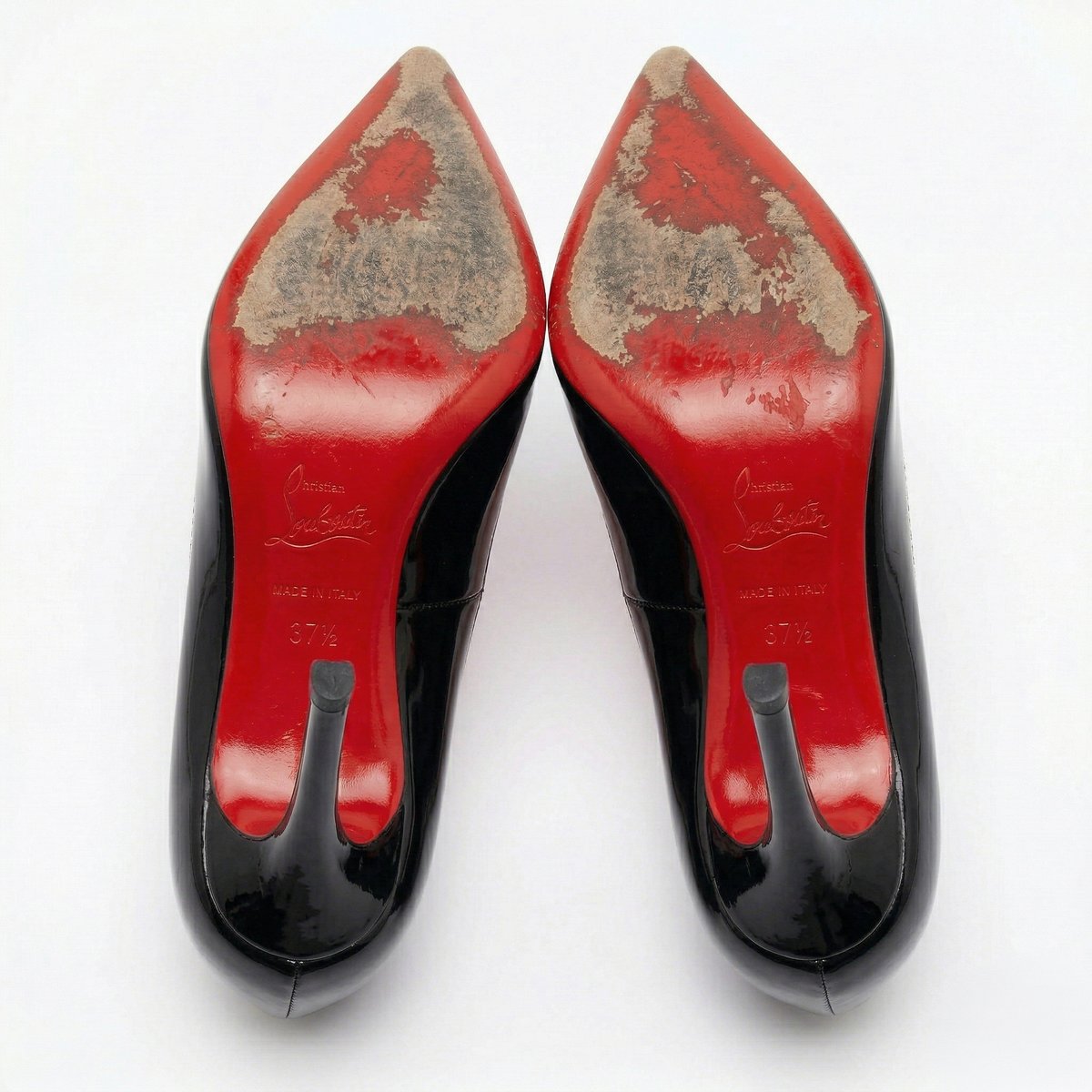
Before
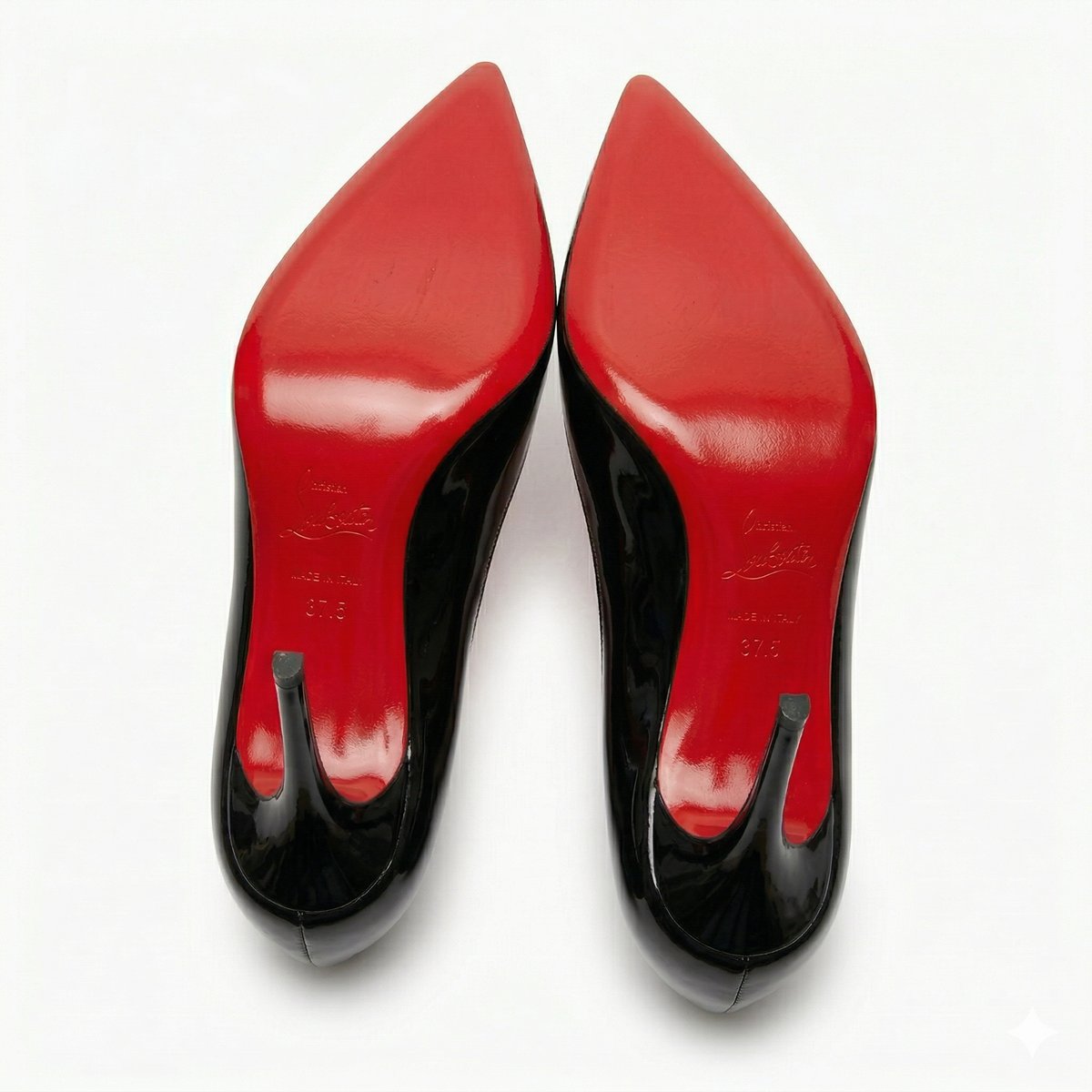
After
Severe Wear
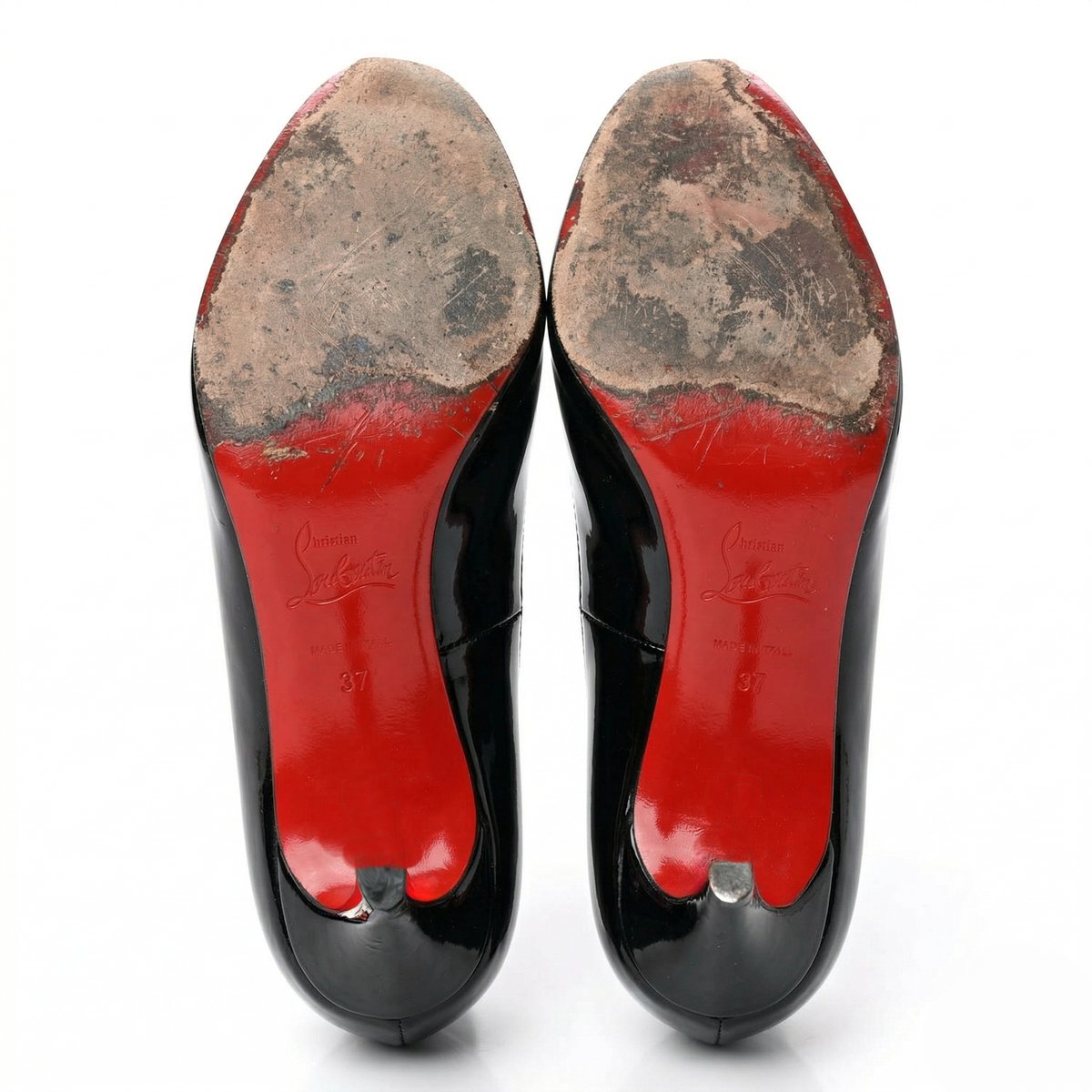
Before
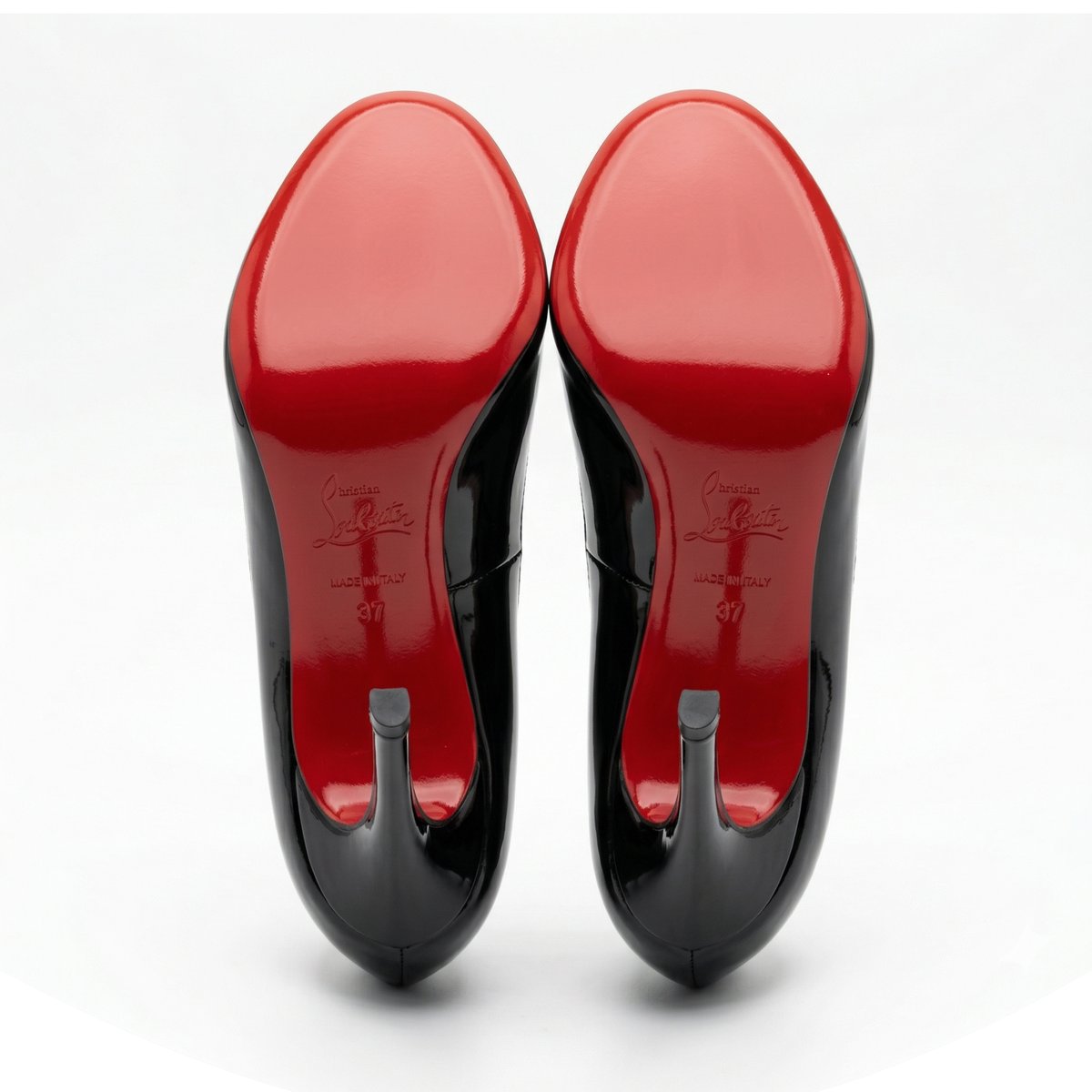
After
Prior Cobbler Repair
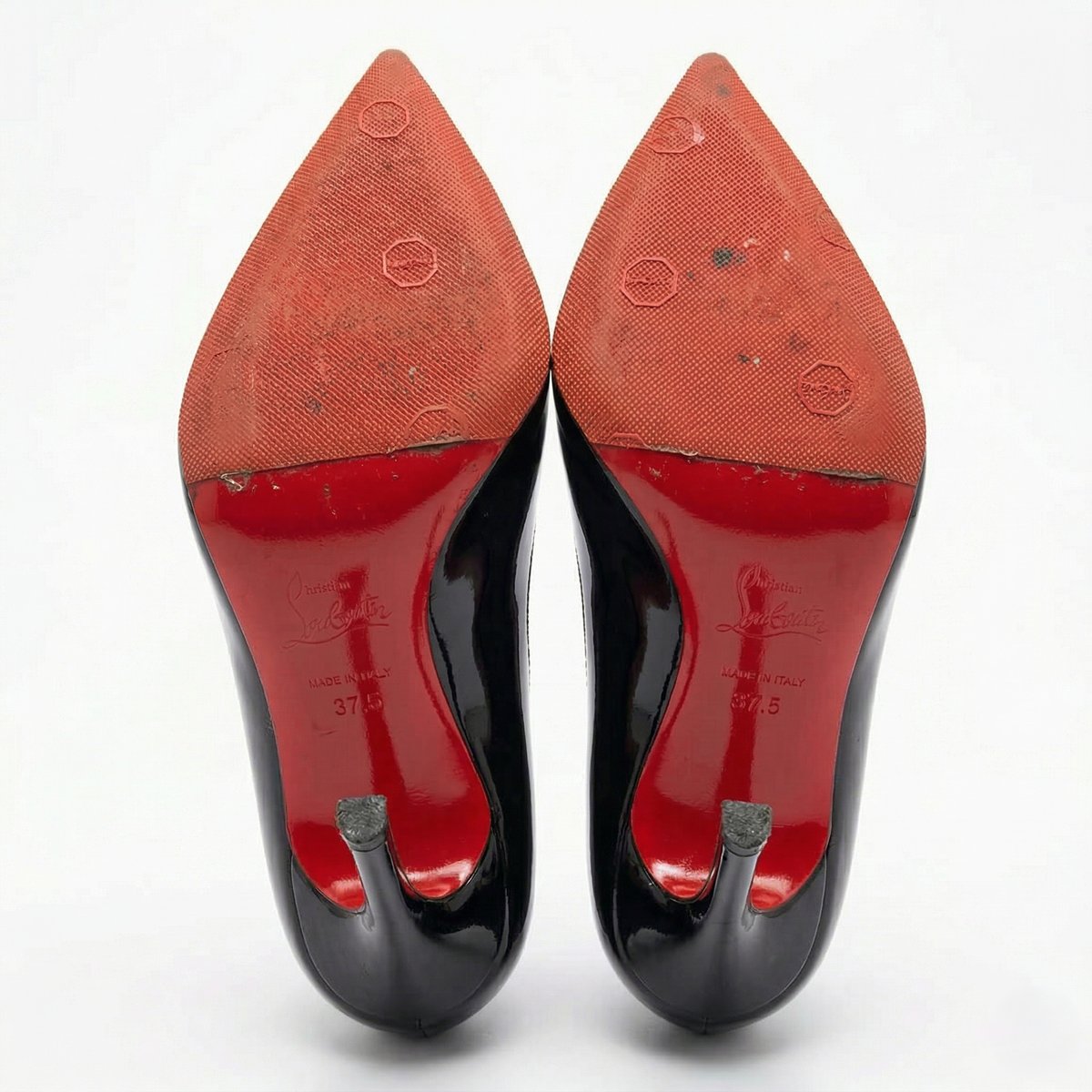
Before
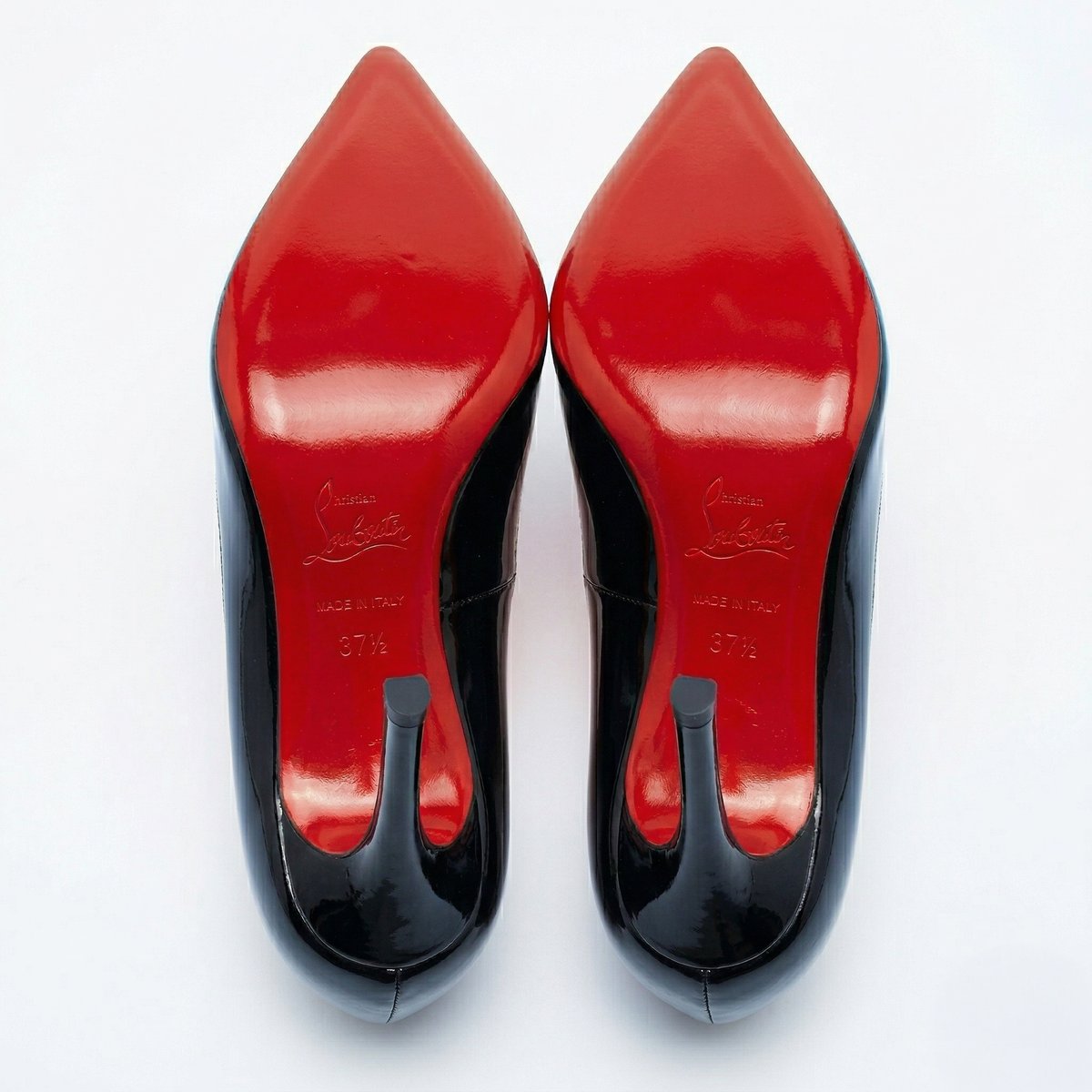
After
The Decision
When Restoration Makes Sense
Restoration is typically chosen by owners who care about more than function. Rubber overlays and repainting both solve the bare-leather problem, but they do so by changing the appearance of the sole. Restoration is for people who want the sole to look the way it was designed to look.
Common scenarios where people pursue restoration:
They care about the original look of the sole and find overlays visually unacceptable.
The shoe carries sentimental or financial value that justifies a more careful approach than a quick repair.
A previous repair — repainting, rubber overlay, or uneven cobbler work — produced a result that looked wrong, and they want it corrected.
The wear has become visually distracting and they want the sole brought back to a clean, uniform red without compromising the shoe's character.
For owners weighing all available options — not just restoration — our guide to Louboutin sole repair covers the full range of methods, trade-offs, and price points.
Common Questions
Questions About Restoring Worn Red Bottoms
Can severely worn red bottoms still be restored?
In many cases, yes. Even soles with extensive wear-through across the forefoot can be restored. The process is more involved — the exposed leather requires thorough surface preparation before the finish can be rebuilt — but severe wear alone does not rule out restoration.
Can a repainted sole be restored again?
Usually, yes. Prior paint layers need to be assessed and often removed to reach a workable surface. The main complication is uneven paint buildup or incompatible products that resist removal cleanly. A sole that was professionally airbrushed is generally easier to work with than one painted with a brush.
Can a sole be restored after rubber protectors?
It depends on the condition of the leather underneath. Rubber half-soles are adhered after sanding away the original lacquer, so the substrate is already altered. If the leather is still structurally sound, restoration of the visual finish is typically possible — but the starting point is different from a sole that was simply worn.
Is restoration worth it for older pairs?
That depends on the owner's priorities. Louboutins that carry sentimental value, are a discontinued style, or are simply a favorite pair are common candidates. The decision is rarely about the age of the shoe — it is about whether the shoe is worth preserving in its intended form.
What is the difference between restoring and resoling?
Resoling replaces the sole material itself — often with a rubber half-sole that changes the shoe's appearance. Restoration works with the existing leather sole and rebuilds the red lacquer finish on top of it. The goal is preserving the original visual character, not replacing the sole with a different material. For a breakdown of how these approaches compare, see our guide to fixing red bottoms.
Not sure what's right for your shoes?
Resole vs Repaint vs Protect vs Century — Which Option Is Right?Worn Does Not Mean Lost.
Many red soles that look finished are still candidates for restoration. The question is not whether they are worn. It is whether the next step preserves the look of the sole or replaces it with something else.
Limited intake — request your restoration today.