Are Louboutin Soles Supposed to Wear Off?
Yes. The red lacquer finish wears from the first contact with pavement.
The signature red sole is created by applying lacquer over a leather outsole. Lacquer sits on the surface rather than penetrating the material, so friction strips it away as soon as the shoe meets hard ground. This is entirely normal — the brand itself confirms that sole wear is expected use, not a manufacturing defect.
See Our ResultsThe Short Answer
Yes — This Is Normal
The red lacquer finish on Louboutin soles wears naturally with use. Even light outdoor wear can create visible scuffing. This is expected behavior for lacquer applied over leather — not a sign of a faulty pair. Louboutin's own product care page states plainly that sole wear is normal and is not covered as a defect.
The Material
Why the Red Sole Wears So Quickly
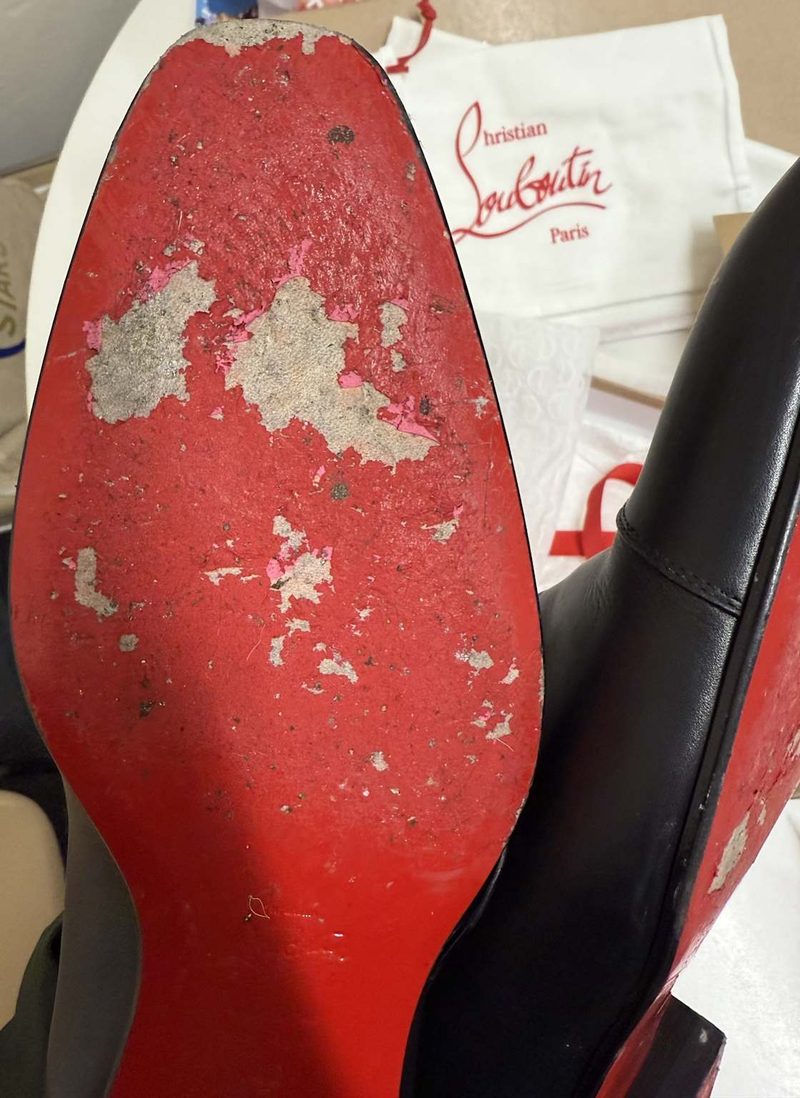
The red sole is lacquer applied over traditional European beige leather. Unlike a dyed-through material or a molded rubber outsole, the lacquer sits on the surface of the substrate. It does not penetrate. Every step on a hard surface creates friction that strips the coating away.
The areas under highest pressure degrade first. The ball of the foot and the toe absorb the most friction and show wear fastest — sometimes within a single outing. The arch, which rarely makes full contact with the ground, retains color longest.
This is fundamentally a material trade-off. The lacquer finish creates the distinctive visual impact that defines the shoe. It was never engineered for all-terrain durability.
The Timeline
How Quickly Wear Appears
Visible scuffing can appear after a single outdoor wear. On rough pavement or textured surfaces, the ball of the foot may show clear abrasion after just a few hours. This is well-documented across owner communities — it is not unusual for a new pair to show marks after one evening.
Wet surfaces accelerate the process dramatically. Leather soles are porous and absorb moisture, degrading exponentially faster when wet. A short walk across wet pavement can cause more damage than several dry outings. Experienced owners treat moisture as the single most destructive variable.
On smooth indoor surfaces — carpet, hardwood, polished stone — the finish lasts substantially longer. Owners who wear Louboutins exclusively indoors can preserve the lacquer for years. For a deeper look at what determines lifespan, see our guide to how long Louboutin soles last.
The Progression
How Red Sole Wear Usually Progresses
Wear follows a consistent, predictable pattern across virtually every pair.
Light Scuffing
Surface abrasion on the ball of the foot. The lacquer is dulled but still intact across most of the sole. The finish looks used but not destroyed.
Moderate Wear
The lacquer is visibly thinning across the forefoot. Color appears uneven — red in protected areas, faded where friction is heaviest. The beginning of wear-through may be visible in high-contact zones.
Heavy Wear
Large sections of red are gone. The beige leather substrate is exposed across significant portions of the forefoot. The original lacquer is mostly absent from high-contact areas.
Severe Wear-Through
Extensive wear across the entire forefoot. Raw sole material widely exposed, with deep abrasion and significant texture loss. At this stage the leather itself may need attention, not just the finish.
This progression is typical, not unusual. For a detailed look at each stage and what can be done at each level, see our guide to fixing red bottoms.
The Options
What People Do Once the Red Starts Wearing
Leave It Alone
A significant contingent of experienced owners simply let the soles wear naturally. They enjoy the shoe without anxiety and only intervene when the leather itself is visibly degraded or the heel tip approaches the metal pin. This is particularly common among owners who wear Louboutins primarily indoors.
Repaint or Touch Up
Professional repainting with an airbrush can restore the red finish to near-original appearance — but the paint faces the same friction as the original lacquer and wears off again at a similar rate. DIY options exist but produce a noticeable color difference from the original. Repainting is a short-term cosmetic fix, not a permanent solution.
Add Rubber Protectors
Rubber half-soles (Vibram, TOPY, or Casali mirror) protect the leather underneath and can last for years. The trade-off is visual: rubber changes the appearance of the sole. The community consensus is to wait until the red has already worn before applying protection, since installation requires sanding away the original finish. For more on this, see our comparison of protectors vs restoration.
Restore the Finish
Restoration aims to rebuild the appearance of the original red lacquer — the specific hue, sheen, and depth — rather than covering the sole with rubber or recoloring it with a mismatched paint. The goal is a sole that looks the way it was designed to look, not like a repair. For a comparison of all available methods, see our guide to Louboutin sole repair.
For Reference
What Normal Wear Looks Like
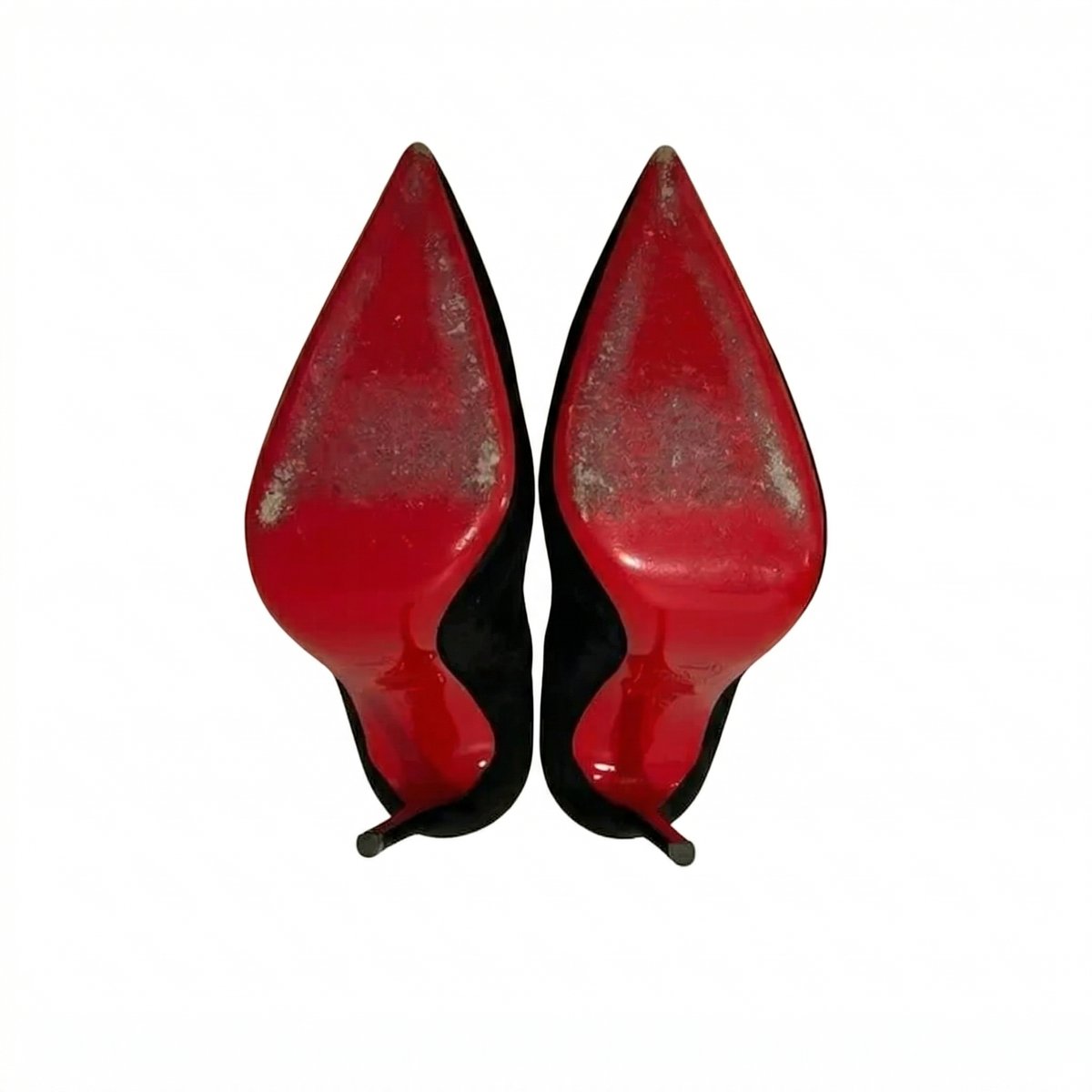
Light Wear
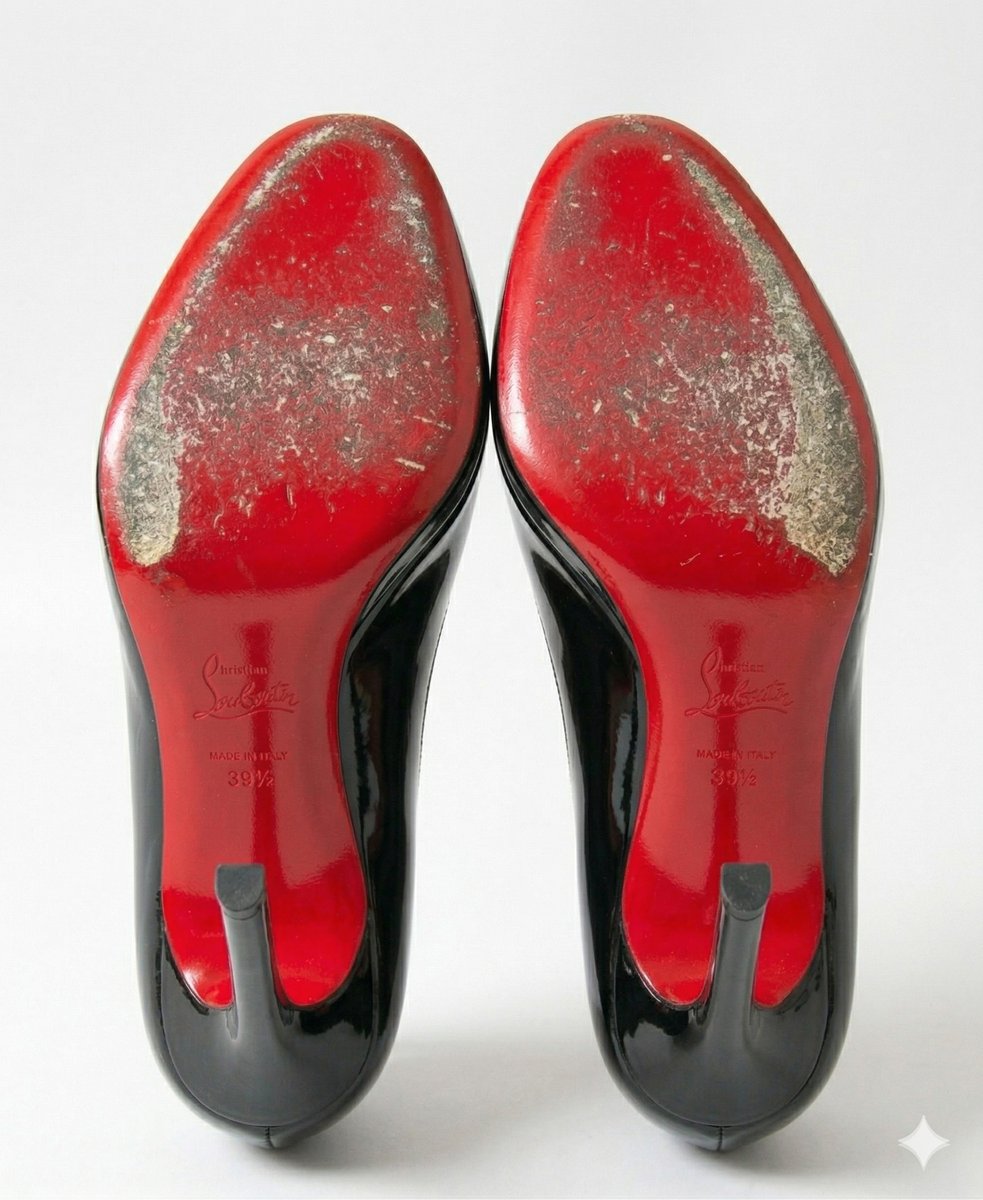
Moderate Wear
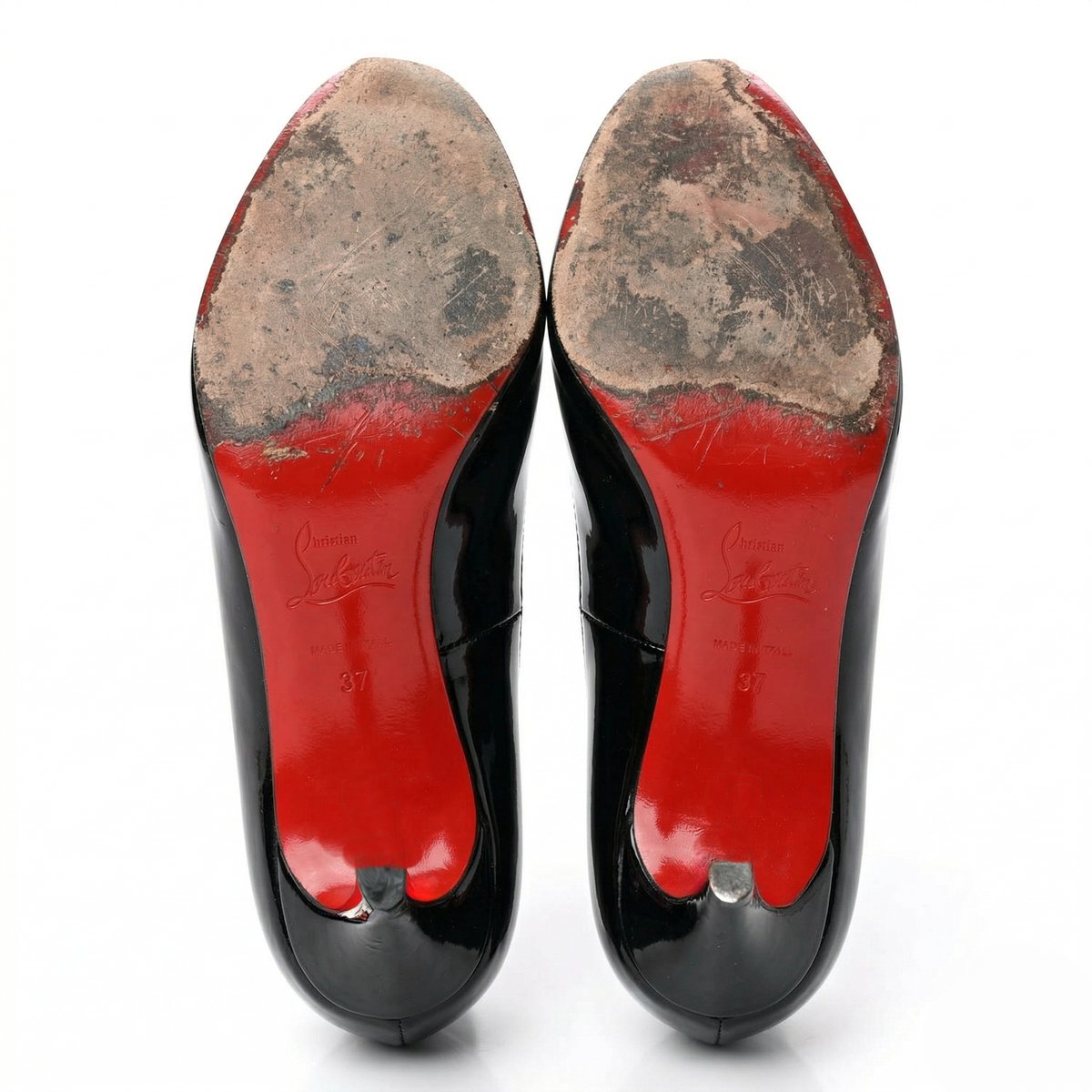
Severe Wear
Common Questions
Questions About Red Sole Wear
Is it normal for Louboutins to scuff after one wear?
Yes. Visible scuffing after a single outdoor outing is well-documented and entirely typical. The lacquer finish is a surface coating — not an engineered outsole — and begins wearing from the first contact with pavement.
Do all Louboutin soles wear off?
All traditional lacquered leather soles will wear with use. The rate depends on surfaces, moisture, and frequency. Louboutin's newer Everlasting Red sole, available on select models only, is designed for greater durability — but the vast majority of the catalogue still uses the traditional finish.
Does walking indoors prevent wear?
Smooth indoor surfaces cause minimal abrasion. Owners who wear Louboutins exclusively on carpet, hardwood, or polished stone can preserve the lacquer for years. It is outdoor surfaces — pavement, concrete, cobblestone — that strip the finish quickly.
Does rain damage the red sole faster?
Significantly. Leather soles are porous and absorb moisture, degrading the lacquer exponentially faster when wet. A short walk across wet pavement can do more damage than several dry outings. Experienced owners avoid wet conditions entirely when possible.
Can worn red bottoms still be restored?
Yes — even severely worn soles can be restored. Restoration rebuilds the appearance of the original red lacquer through surface preparation, layered color work, and finish refinement. For more on what that looks like at each wear level, see our guide to fixing red bottoms.
Not sure what's right for your shoes?
Resole vs Repaint vs Protect vs Century — Which Option Is Right?Wear Is Normal. What Happens Next Is a Choice.
Once wear begins, owners choose between rubber overlays, repainting, or restoration — depending on whether they prioritize durability, cost, or preserving the original look of the sole.
Limited intake — request your restoration today.